ATMOS Space Cargo and ESA complete Phase 0 concept study for PHOENIX 3 at Concurrent Design Facility
Noordwijk, Netherlands
Study matured the concept and identified the principal trade-offs for Europe’s next class of reusable return vehicles. Findings now feed into ATMOS’s Phase A work.
Noordwijk, Netherlands, 18 August 2026 – ATMOS Space Cargo has completed a Phase 0 concept study for PHOENIX 3, the next-generation vehicle in its PHOENIX family, together with the European Space Agency’s Concurrent Design Facility (CDF) at ESTEC in Noordwijk, the Netherlands.
Over several weeks, experts from across ESA’s engineering disciplines worked alongside the ATMOS team to assess the feasibility of PHOENIX 3, a fully European reusable orbital return vehicle intended to carry scientific and industrial payloads to low Earth orbit and return them to Earth for rapid analysis on the ground. The study was led for ATMOS by Chief Technology Officer Jeffrey Hendrikse and Chief Operating Officer and Co-Founder Marta Oliveira.
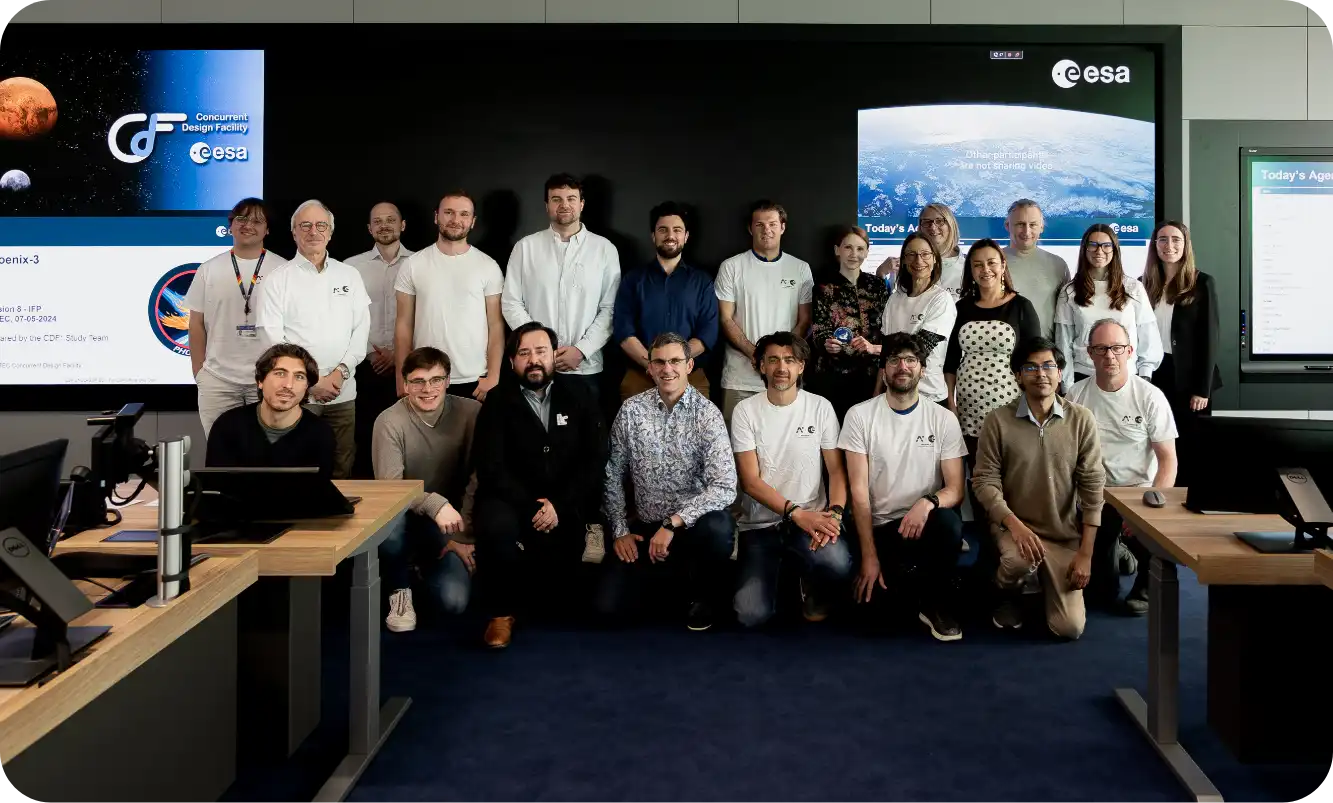
Image: Teams from ESA and ATMOS during CDF concept study for PHOENIX 3
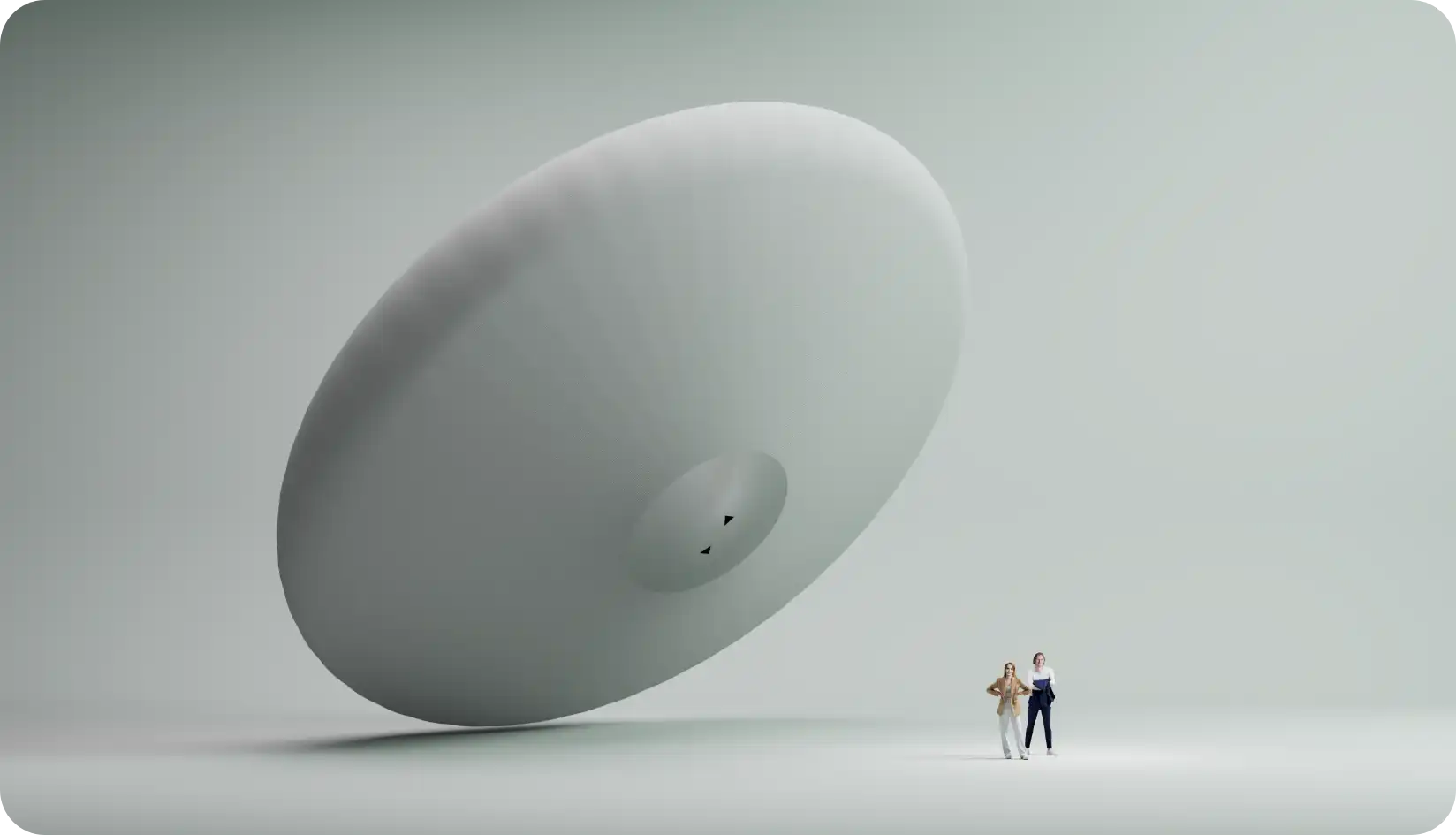
The study examined a reference mission scenario across the full mission cycle: launch into low Earth orbit, support for microgravity research, in-space manufacturing and in-orbit demonstration of new technologies, followed by controlled de-orbit and atmospheric entry using ATMOS’s Inflatable Atmospheric Decelerator (IAD) — a non-ablative system that serves as both heat shield and aerodynamic brake — and recovery for refurbishment and reuse.
Image: ATMOS COO Marta Oliveira and ATMOS CTO Jeffrey Hendrikse discussing PHOENIX 3 during CDF concept study
Jeffrey Hendrikse, Chief Technology Officer and Co-Founder of ATMOS Space Cargo, says:
“The study builds on the IAD technology and flight data we are generating across the PHOENIX family. The CDF allowed us to examine the vehicle as one interconnected system rather than considering its individual technologies and the requirements of microgravity customers in isolation. We thank ESA’s Directorate of Human and Robotic Exploration for its input throughout the study. This system-level perspective is now informing how we refine the PHOENIX 3 mission requirements and architecture.”
Image: CDF expert discusses PHOENIX 3 concept study
As intended for a Phase 0 assessment, the study matured the initial concept, assessed a reference architecture and identified the key trade-offs, risks and design drivers that will shape the next stage of development. The configuration assessed serves as a reference for the study; it is not a frozen design, and key trade-offs remain open. The findings now feed directly into ATMOS’s internal Phase A work, in which the team will refine the mission and vehicle concept.
ESA supported the study through its Third Party Activity initiative, which opens the agency’s consultancy and testing infrastructure to the European industrial ecosystem, from startups to large-scale enterprises, in line with its mandate to strengthen the competitiveness of European industry.
“The CDF study also identified key trade-offs and risks to be addressed next, providing a solid starting point for Phase A, in which ATMOS will focus on the optimisation of aerodynamics, stability and thermal design, and on improving entry modelling and guidance to increase landing accuracy,”
“The value of the CDF is the ability to examine every major subsystem and interface at the same time,”
says Marta Oliveira, Chief Operating Officer and Co-Founder of ATMOS Space Cargo.
“Bringing specialists from across disciplines into one concurrent process helped us identify dependencies that would be difficult to resolve through sequential engineering work.”
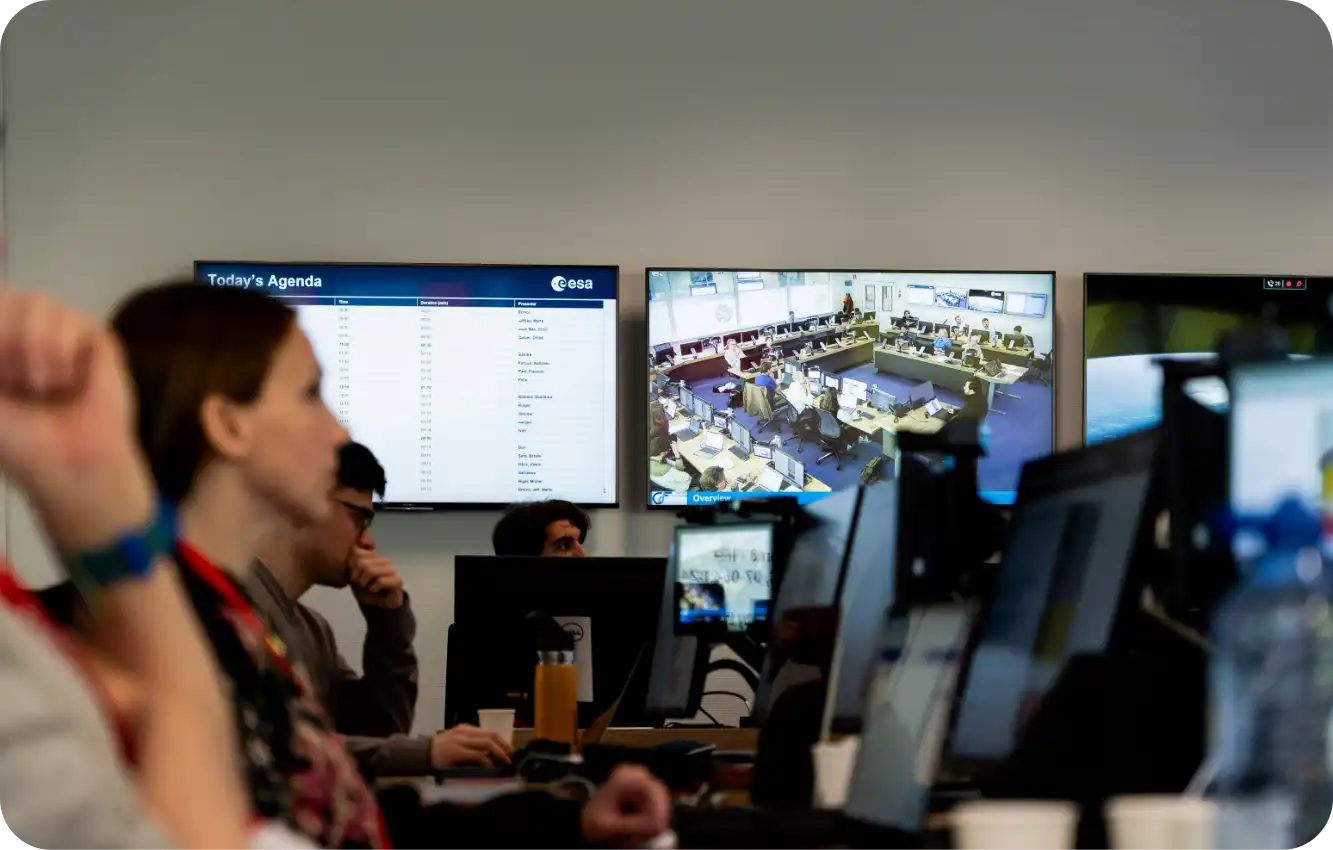
Image: CDF concept study for PHOENIX 3 in action
“Central to this collaboration is the topic of sustainability. By defining a new, scalable class of reusable return vehicles, the study addresses the urgent need for circularity in orbit and reduced environmental footprint in space operations. At the same time, ATMOS is developing concepts and solutions that will directly benefit industrialisation capabilities and sovereign infrastructure within Europe,”
adds Ilaria Roma, Head of ESA’s Concurrent Design Facility.
ATMOS’s near-term focus remains the three-flight PHOENIX 2 mission campaign, aimed at multi-week in-orbit payload and spacecraft operations and the controlled return of commercial payloads from low Earth orbit to European recovery in the Azores, Portugal.
The full ESA article on the study is available at esa.int.
Image: Artist impression of the PHOENIX 3 inflatable atmospheric decelerator, to scale with 3D models of ATMOS CTO Jeffrey Hendrikse and COO Marta Oliveira. Indicative concept, not a final design.